


Insights
Under the Global Energy Shift: China’s New Energy “Resilience” and Opportunities

In 2026, energy security has never been more critical to the global economy.
Tensions in the Strait of Hormuz and the ongoing impacts of the Russia-Ukraine conflict have sent fossil fuel prices on a rollercoaster ride. According to the International Renewable Energy Agency (IRENA), during the European energy crisis in 2022, wholesale electricity prices in the EU surged to approximately RMB 3.9 per kWh. Even after the crisis, commercial and industrial electricity prices in Europe remain high, generally ranging between RMB 1.17 and 1.4 per kWh. High electricity costs not only burden businesses but also directly erode manufacturing competitiveness.
This is not just Europe's predicament. For many countries heavily dependent on energy imports, every geopolitical tremor risks triggering domestic power shortages and industrial shutdowns.
As an expert quoted by Global Times put it: "Among all nations, China stands as a model of transitioning from an oil-based to an electricity-based economy."
The "China Solution" for Energy Security
Amid the profound reshaping of the global energy landscape, China has carved a distinct path.
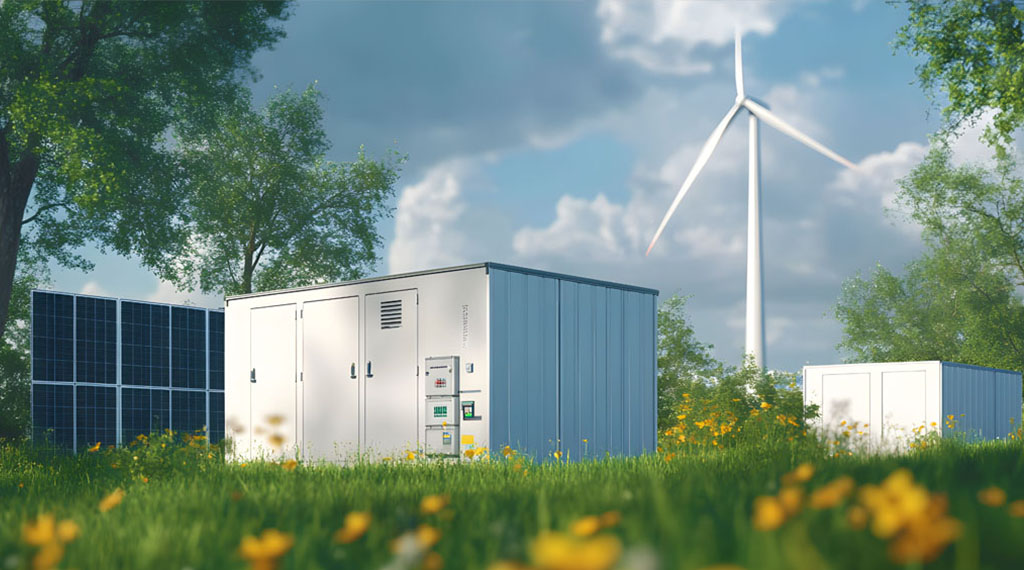
The "Wind-Solar-Storage Integration" model — the deep integration of wind power, photovoltaics, and energy storage — is emerging as the optimal solution balancing economic development and energy security. This pathway has already proven viable:
Cost Advantage: According to IRENA, China has defined the world's most stable and cheapest "solar + storage" power generation model, with costs now lower than newly built coal-fired power. Industry data for 2026 shows that the levelized cost of electricity (LCOE) for large-scale "PV + storage" systems has dropped to approximately RMB 0.39 per kWh.
Industrial Advantage: China now accounts for over 70% of the global supply chain in solar, wind, batteries, and electric vehicles. This scale and efficiency have significantly driven down global clean energy costs.
Strategic Depth: By the end of 2025, renewable energy accounted for over 60% of China's installed power generation capacity, making it the country's primary power source. This fundamental shift in energy structure has substantially reduced China's dependence on international oil and gas markets, enabling the country to demonstrate remarkable "resilience" amid global energy shocks.
Reuters reporting echoes this view: China is the largest importer of oil through the Strait of Hormuz, yet it is also the country best positioned to weather a supply disruption there.
From "Made in China" to "Solution by China"
This advantage is not just reflected in statistics — it is embedded in deployable "China Solutions."
In Vietnamese mines, over 120 Chinese electric construction machines are operating, cutting per-ton mining costs by 50%. Supported by green microgrids built on "PV + storage + charging," electric equipment runs reliably even in remote mining areas.
In Ukraine, where war has severely damaged the conventional power system, energy storage has shifted from a supporting role to a "survival asset" sustaining hospitals, communications, and critical infrastructure. Chinese energy storage has become a key supply force capable of delivering large-scale, engineered solutions for such extreme scenarios.
Even at Europe's leading renewable energy exhibition — Intersolar Europe — over a quarter of exhibitors (approximately 770) came from China. The organizers noted that China's influence extends beyond photovoltaics and has profoundly reshaped the development trajectory of the energy storage industry.
Connecting Global Buyers with China's New Energy Supply Chain
For international buyers, investors, and business delegations, these signals point to a clear opportunity: China's new energy sector is at a critical window of technological maturity, cost reduction, and global capacity expansion.
We see that sovereign wealth funds from the Middle East, energy developers from Europe, and channel partners from Southeast Asia are all actively seeking efficient pathways to connect with China's new energy supply chain.
Our team is built precisely for this purpose.
Whether you wish to visit China's smart factories, explore the PV and energy storage supply chain, attend new energy-themed exhibitions, or connect with manufacturers in Guangdong or the Yangtze River Delta, we provide full-chain services — from itinerary planning and professional interpretation to factory appointments and business negotiation support.
Reach out to us via our website or social platforms to explore how China's "energy resilience" can become the growth engine for your business.
Inspiring Business in China. Delivered.
Sinowise Discovery specializes in providing business study tours, supply chain matchmaking, and event planning services in China for overseas enterprises, investors, and trade delegations.