


Insights
AI’s New World Order: Compute, Models, and the Energy Behind Them

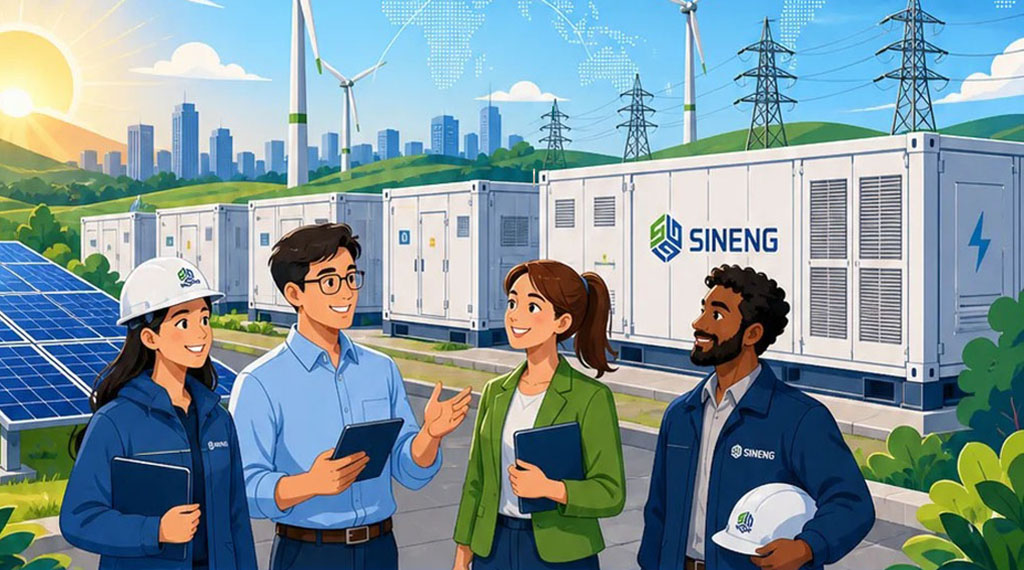
Computing Power, Large Models, Green Energy: Three Pillars of Global AI Infrastructure – China Already Leads in Two
The endgame of the AI revolution doesn't belong to the company with the slickest app. It belongs to three types of players: those who own the compute, those who own the large models, and those who own the energy.
This is not speculation. It is reality unfolding.
Large Models: China's Open-Source Models Have Reached the Top
Start with the most visible layer – large models.
Hugging Face's Spring 2026 report shows that China-origin open‑source models accounted for 41% of global downloads for the first time, surpassing the United States to become the world's largest supplier of open‑source models. Cumulative downloads of Chinese open‑source models have exceeded 10 billion, ranking first globally.
In global weekly call volume rankings, the top four spots are all held by Chinese open‑source models – a landscape previously dominated by overseas models has now been reshaped. On the OpenRouter platform, Chinese models such as MiniMax, DeepSeek and Kimi consistently rank among the top in global call volume.
More concretely: in February 2026, total token consumption among the world's top 10 models exceeded 28.7 trillion, with Chinese models contributing 14.69 trillion – a 51.2% share.
What does this mean? Developers around the world are building with Chinese large models. Qwen has surpassed 2 billion cumulative downloads – five times that of Google's models. Professor Ion Stoica of UC Berkeley noted that the gap between Chinese open‑source models and the world's best closed‑source models has shrunk from 6‑9 months to just 2‑3 months.
The conclusion is clear: in large models, China is now firmly in the global first tier. From cost to usability, Chinese large models are an unavoidable choice for developers everywhere.
Green Energy & Storage: China's Greatest Asset
If large models are China's "visible strength," green energy and storage are the real "foundation."
As of the end of May 2026, China's installed power generation capacity surpassed 4.01 billion kilowatts, ranking first in the world – exceeding the combined total of the US, Europe, India, Japan, and Russia. Renewable energy now accounts for 62% of the total, while coal's share has dropped from 61% in 2010 to 32%. China holds the world's most complete new‑energy industrial chain, with over 70% of global solar PV and wind equipment manufacturing capacity.
This is the real reason behind China's "cheap tokens." One kilowatt‑hour of electricity costs around RMB 0.5. When that same kWh drives GPUs to generate tokens, its value can multiply by over 22 times. "Watts" are being packaged as "bits" for export – essentially trading green electrons for global computing revenue.
Nvidia CEO Jensen Huang has also pointed out China's core advantage lies in abundant energy – using its massive power system and scale to offset per‑chip performance gaps through cluster efficiency.
The 2026 Government Work Report for the first time included "compute‑power‑electricity synergy" as a national strategic priority. The underlying logic is straightforward: western green power → eastern data‑computing transfer → AI computing clusters → token exports, forming a complete value chain.
And the critical link in this chain is energy storage.
Storage plays two roles in this chain: the "carrier" of green power – turning intermittent wind and solar into stable compute power; and the "pacemaker" for computing centers – smoothing the millisecond‑level load fluctuations of AI clusters.
What does this mean for overseas clients? If you are building a computing center or data center, energy storage is not optional – it is mandatory. And the world's best small‑to‑medium‑scale energy storage solutions are made in China.
Take Zhongtian Technology's ENERGRID NA3 liquid‑cooled ESS as an example – a 10‑foot compact container, AC‑DC integrated, with over 98% round‑trip efficiency, precisely designed for small‑to‑medium AI compute nodes and edge data centers. Enerland's modular storage PCS has been shipped to over 60 countries, with overseas business already accounting for 85% of its revenue.
Whether large‑scale or small‑to‑medium storage, China's supply chain is the most complete, lowest‑cost, and fastest‑responding in the world.
Computing Power: Gap, but Also Opportunity
On the compute‑infrastructure side, China does lag the United States.
Of the world's 50 largest AI data centers, the US hosts 45, China just 2. In total compute capacity, the US accounts for roughly 94% globally, while China holds about 2%.
But China has taken a different path: using system integration to compensate for per‑chip gaps, and engineering strength to offset hardware constraints. Through more efficient interconnect architectures and domestic chip stacking, China's intelligent computing scale has reached about 1.59 million PFlops, ranking second globally.
China spends twice as much money and twice as much electricity to deliver one unit of compute – but that precisely demonstrates the certainty of China's investment appetite and its ability to build compute infrastructure at scale.
The National Development and Reform Commission has already made clear that during the 15th Five‑Year Plan period, construction of the national computing network will generate an additional RMB 4 trillion in direct investment.
What Does This Mean for Global Buyers?
If you are planning AI compute centers, data centers, or any high‑performance computing infrastructure – China's storage, large‑model ecosystem, and compute hardware supply chain are emerging as the optimal solution for global AI infrastructure.
Large models – China offers the world's largest and most affordable open‑source ecosystem.
Green energy – China has the world's largest power grid and new‑energy installation base.
Energy storage – China has the world's most complete and most export‑oriented supply chain.
This is not an "alternative." This is the reality already in use globally.
What we do is help international buyers step inside this AI infrastructure revolution – from energy‑storage systems for AI‑data‑centres to compute‑center infrastructure equipment, from solar‑PV components to large‑model hardware. We arrange custom‑tailored China factory‑inspection business‑missions, connecting you directly to verified new‑energy and AI‑infrastructure supply‑chain manufacturers across China.
As your local China procurement‑agent, we can also provide long‑term sourcing support after your on‑site supplier visits.
If you are evaluating energy‑storage solutions for AI compute‑centres, or full‑set infrastructure equipment for small‑to‑medium‑scale data‑centre projects, we welcome the conversation.